Most Common Parts That Fail During a Rally Season: A Technical Breakdown for Teams and Drivers
Rallying pushes cars and crews to their limits, combining high-speed precision with harsh and unpredictable terrain. Understanding which parts fail most often and why is crucial for rally teams aiming to maximize reliability alongside performance. In this guide, we’ll explore the technical weak points that frequently challenge rally cars across WRC rally stages and regional championships alike.
Overview of Rally Car Reliability Challenges
Rally cars endure extreme stresses unlike any other motorsport vehicles. They must perform on gravel, tarmac, snow, and mixed surfaces, often within the same event. The rapid transitions between stages, high impacts from jumps and rocks, and prolonged mechanical strain all create a perfect storm for component failures.
Key factors affecting reliability include:
- Varied rally car setup adaptations for gravel vs tarmac setups
- Stage conditions ranging from muddy forest tracks to abrasive asphalt roads
- Regulatory constraints on parts and service times, limiting repairs during events
- The strategic balance between aggressive driving and mechanical sympathy
Key Technical Points: Parts Vulnerable to Failure
Suspension Components: The Achilles’ Heel on Rough Terrain
Rally suspension systems are engineered for durability and flexibility, but they still rank among the most failure-prone parts.
- Shock absorbers and struts: Constant high-frequency impacts cause fluid leaks or piston damage.
- Control arms and ball joints: Repeated stress and stone impacts can bend or crack these components.
- Bushings: Wear quickly under aggressive driving and poor road surfaces, leading to increased play.
For example, during gravel-heavy WRC rally stages like Rally Finland, suspension parts often require replacement or reinforcement after each leg. Teams frequently carry spare arms and shocks for quick swaps.
Transmission and Drivetrain: Handling Torque and Rough Shifts
Transmitting power reliably under rapid gear changes and torque spikes is critical.
- Gearboxes: Sequential transmissions face clutch slippage and gear tooth damage from aggressive upshifts.
- Differentials: Limited-slip differentials endure intense torque loads, especially in tight corners on loose surfaces.
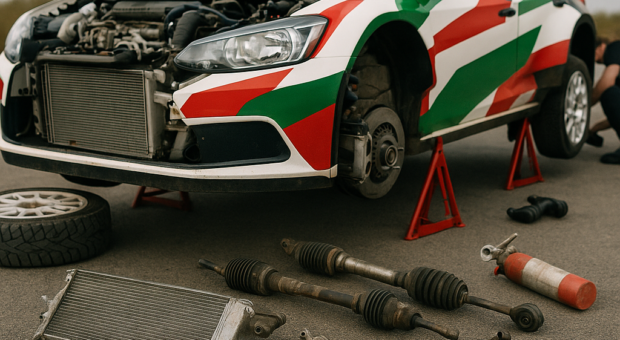
- Driveshafts and CV joints: Vulnerable to impacts from rocks and jumps, leading to cracks or joint failure.
A notable example is the frequent clutch wear seen in tight, technical stages like those in the Wales Rally GB, where constant shifting under slippery conditions stresses drivetrain components.
Engine and Cooling Systems: Balancing Power and Heat
Engines in rally cars are tuned for high-performance bursts but must withstand prolonged stage demands.
- Turbochargers: High boost pressures can cause premature wear or overheating.
- Radiators and intercoolers: Mud and debris block airflow, causing overheating and potential engine damage.
- Oil and coolant lines: Vibrations and impacts can cause leaks or ruptures.
During hot and dusty gravel rallies, such as Rally Turkey, cooling system failures are common due to clogged radiators and intercoolers, emphasizing the need for protective mesh screens and maintenance.
Brakes and Steering: Essential for Control but Prone to Wear
Given the intense braking zones and rapid directional changes, these systems are heavily taxed.
- Brake pads and discs: Overheating and aggressive use lead to glazing, warping, or complete failure.
- Brake lines: Risk of damage from debris and rough terrain.
- Steering racks: High lateral loads and impacts can cause leaks or mechanical wear.
In fast tarmac stages like Rallye Deutschland, drivers often face brake fade or failure if cooling isn’t optimized, forcing teams to carefully select brake compounds and cooling ducts.
Stage Conditions and Their Impact on Part Failures
Gravel vs Tarmac Setup: Different Demands, Different Failures
- Gravel stages: Higher likelihood of suspension damage, tire punctures, and drivetrain shocks.
- Tarmac stages: More brake overheating and gearbox wear due to aggressive cornering and braking.
Teams adjust setups accordingly, but this also means parts optimized for one surface may degrade faster on another.
Harsh Weather and Surface Variability
- Mud and snow increase risk of clogged radiators and corrosion.
- Dry dust leads to accelerated wear on moving parts and filters.
- Wet conditions increase chances of electrical faults and clutch slippage.
Each rally’s unique conditions require tailored preventative measures to mitigate part failures.
Strategy Insights: Minimizing Mechanical Failures During a Rally Season
Successful rally teams combine technical knowledge with strategic planning.
- Pre-event inspections: Thorough checks of suspension, drivetrain, and cooling components to catch early wear.
- Spare parts management: Carrying essential spares like shock absorbers, drive shafts, and brake components for quick roadside repairs.
- Driving style adaptation: Teaching drivers to balance aggression with mechanical sympathy, especially on fragile stages.
- Service time optimization: Efficient use of limited service intervals to replace or repair worn parts without losing competitive time.
Understanding the trade-offs between performance tuning and reliability is key in championship campaigns.
Common Mistakes Leading to Part Failures in Rally Cars
- Over-aggressive suspension setup leading to premature shock absorber failure.
- Ignoring early signs of drivetrain vibration or noise, resulting in catastrophic transmission damage.
- Inadequate cooling system protection causing engine overheating on dusty stages.
- Poor brake management causing fade and loss of control on fast tarmac sections.
Teams that learn from these pitfalls improve their rally car reliability and overall results.
For rally enthusiasts and competitors alike, knowing which parts are most vulnerable during a rally season helps deepen appreciation for the sport’s technical complexity. Whether tuning setups for gravel vs tarmac or managing the fine balance of speed and durability, every mechanical detail matters when chasing rally glory. Staying informed and prepared is what separates podium contenders from those caught out by the relentless demands of rallying.
See also our previous article: The real cost of a rally season: car, parts, logistics, and entry fees