Most Common Rally Car Parts That Fail During a Rally Season: A Technical Breakdown
Rally racing demands not only driver skill and team strategy but also impeccable reliability from every component of the rally car. Across the grueling WRC rally stages, from high-speed gravel tracks to twisty tarmac sections, certain parts consistently face extreme stress and are prone to failure. Understanding which components fail most often and why can help teams optimize their rally car setup, improve reliability, and ultimately gain a competitive edge.
Overview of Rally Car Reliability Challenges
Rally cars endure some of the harshest conditions in motorsport. Each rally stage tests suspension, drivetrain, engine components, and electronics under rapid load changes, variable traction, and impacts. Unlike circuit racing, where conditions are more controlled, rally teams must adapt to constantly shifting terrain and weather, which can accelerate wear and cause unexpected failures.
Key factors influencing rally car reliability include:
- Varied surfaces: gravel, mud, snow, tarmac
- Abrasive debris and rocks damaging underbody and suspension
- Long liaison sections causing mechanical fatigue
- High engine loads with rapid RPM changes
- Extreme temperature variations affecting cooling and electronics
Key Technical Points: Parts Most Vulnerable to Failure
Suspension Components: The Rally Car’s First Line of Defense
Rally suspension is designed to absorb brutal impacts while maintaining tire contact and control. However, suspension arms, bushings, and dampers are among the most frequently damaged parts.
- Control Arms and Tie Rods: Constantly exposed to impacts from rocks and jumps, these parts can bend or break, especially on gravel stages.
- Suspension Bushings: Fatigue and wear from flexing lead to play and loss of precision in steering.
- Shock Absorbers: Overheating and fluid leaks reduce damping efficiency, impacting handling.
Example: During the iconic Rally Finland, drivers often report broken front lower control arms after high-speed jumps. Teams reinforce these parts but still face failures.
Drivetrain and Transmission: Handling Power on Unpredictable Terrain
The drivetrain transmits engine power to wheels, but rally conditions place enormous stress on it.
- Differentials: Limited-slip differentials can overheat or suffer clutch pack wear, leading to loss of traction control.
- Gearbox: Sequential gearboxes endure frequent shifts under load, causing synchromesh wear and occasional gear failures.
- Clutch Assemblies: Repeated clutch slips during tight hairpins or technical stages cause rapid clutch wear.
Example: In the Sardinia Rally, rocky sections often cause gearbox damage due to sudden torque spikes and harsh downshifts.
Engine and Cooling System: Balancing Power and Endurance
Engines in rally cars are high-strung, turbocharged units that must deliver peak power reliably.
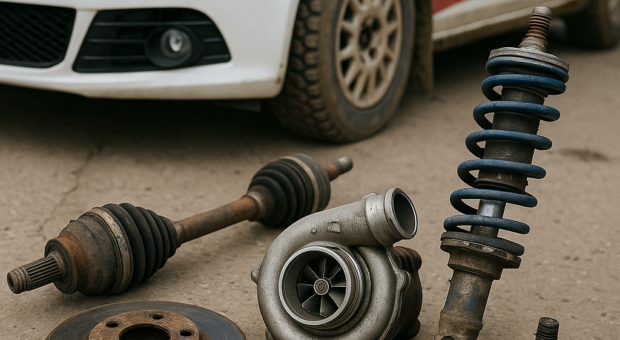
- Turbochargers: High boost pressure and rapid spool-up lead to turbo bearing wear or compressor damage.
- Radiators and Intercoolers: Mud, dust, and debris block airflow, causing overheating and potential engine damage.
- Fuel and Oil Systems: Contamination risks and pump failures can cause power loss or engine seizure.
Example: During the Monte Carlo Rally, icy conditions combined with slow speeds can cause radiator icing, leading to overheating and engine shutdowns.
Brake System: Vital for Stage Control and Safety
Rally brakes operate under extreme thermal and mechanical stress.
- Brake Discs and Pads: Overheating on long downhill sections causes warping or glazing, reducing braking efficiency.
- Brake Lines and Fluid: Exposure to mud and water increases corrosion risk and fluid contamination, potentially leading to failure.
Example: On the steep descents of Rally Spain, brake fade is a common issue, forcing teams to adjust brake cooling and pad compounds.
Stage Conditions and Their Impact on Part Failures
Gravel vs Tarmac Setup and Reliability
Gravel stages impose greater impact loads and abrasion, increasing suspension and underbody failures. Tarmac stages generate higher braking and cornering forces, stressing brakes and drivetrain.
- Gravel stages: Higher risk of suspension arm breakage, differential overheating, and underbody damage.
- Tarmac stages: Increased brake wear, gearbox stress, and engine overheating due to aggressive driving.
Weather and Terrain Influence
- Wet and muddy conditions accelerate corrosion and clog cooling systems.
- Snow and ice stages cause clutch and drivetrain slippage, increasing wear.
- Hot and dusty environments challenge engine cooling and air filters.
Strategy Insights: Managing Reliability Across a Rally Season
To minimize part failures, rally teams adopt several strategies:
- Preventive Maintenance: Regular inspection and replacement of high-stress components between stages.
- Component Reinforcement: Using stronger alloys or protective guards on suspension and underbody.
- Adaptive Setup: Tailoring suspension travel, damping rates, and cooling systems for specific stage conditions.
- Driver Feedback Integration: Adjusting driving style to preserve mechanical parts, especially during rough sections.
Teams also closely monitor rally regulations regarding component replacements and parc fermé rules, balancing performance upgrades with reliability constraints.
Common Mistakes Leading to Rally Car Part Failures
- Overly Aggressive Driving: Excessive jumps or impacts at high speed increase suspension breakage risk.
- Ignoring Early Warning Signs: Delaying repairs on worn bushings or leaking shocks often leads to catastrophic failure.
- Inadequate Cooling Management: Poor radiator cleaning or brake cooling setup results in overheating and part damage.
- Improper Setup for Stage Conditions: Using tarmac-focused setups on rough gravel stages causes premature wear.
Rally Fans and Competitors: Understanding Reliability Adds Depth to the Sport
For rally enthusiasts and competitors alike, knowing which parts fail most often and why enriches the appreciation of each stage’s challenges. Behind every spectacular jump or hairpin turn lies a complex balance of engineering, preparation, and strategy aimed at keeping the car running flawlessly. Following motorsport news and rally championship updates with an eye on technical reliability offers deeper insights into team tactics and driver endurance throughout the demanding rally season.
See also our previous article: Pre-rally checklist: brakes, drivetrain, tyres, and safety equipment